Political Science Faculty Book Publications
Janet Box-Steffensmeier

The Oxford Handbook of Engaged Methodological Pluralism (Volumes 1 & 2).
Published by Oxford University Press, 2026.
This Handbook brings together more than 100 scholars to examine the role of methodological pluralism in advancing political science. Edited by Ohio State faculty member Janet M. Box-Steffensmeier and Ohio State alumni Dino P. Christenson and Valeria Sinclair-Chapman, the collection explores how political scientists can draw on a wide range of methodological traditions to address important political and societal questions. The handbook highlights developments in quantitative, qualitative, experimental, interpretive, historical, computational, and mixed-methods research while encouraging engagement across methodological, substantive, and disciplinary boundaries. Through chapters on innovation, knowledge accumulation, pedagogy, ethics, public engagement, and emerging methodological frontiers, the volumes illustrate how methodological pluralism can strengthen the discipline’s capacity to produce rigorous, relevant, and impactful scholarship.
Vladimir Kogan

No Adult Left Behind: How Politics Hijacks Education Policy and Hurts Kids
Published by Cambridge University Press, 2025
For decades, Americans have debated why our students consistently score lower than their peers in other developed countries. While most debates have focused on school spending, curriculum, teacher quality, and teachers' unions, No Adult Left Behind argues that local democratic control is the root of the problem. Elected school boards govern local school districts, but only adults vote in local elections – most of whom don't have children or care about academics. This leads to educational debates that are centered around issues that adults care most about, such as partisanship, identity politics, property values, and employment concerns, while the needs of students get left behind. In identifying the misalignment between the interests of school children and the political and policy agendas of the adults who control education, No Adult Left Behind stands to become a landmark study on modern education politics.
Amanda Robinson
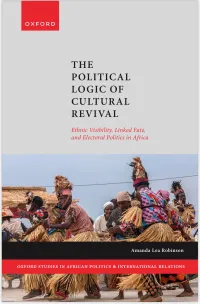
The Political Logic of Cultural Revival: Ethnic Visibility, Linked Fate, and Electoral Politics in Africa
Published by Oxford University Press, 2025
Nicole Yadon
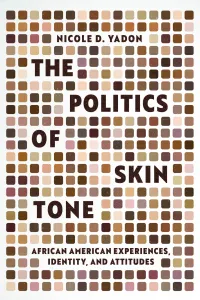
The Politics of Skin Tone: African American Experiences, Identity, and Attitudes
Published by University of Chicago Press, 2025
Research shows that skin tone is associated with significant differences in life experiences. On average, African Americans with darker skin earn lower wages, suffer worse health outcomes, and endure more negative criminal justice experiences than lighter-skinned African Americans. Nicole Yadon conceptualizes skin tone as one facet of the multidimensional construct of race that powerfully influences racialized experiences which, in turn, can influence political identities and attitudes. Drawing on evidence from one hundred in-depth interviews, multiple surveys, and a survey experiment, The Politics of Skin Tone investigates the political associations of skin tone. Yadon finds that skin tone correlates with political attitudes, particularly on issues where color-based disparities are especially pronounced such as criminal justice. Moreover, a sizable number of African Americans adopt a skin tone-based identity. In an era of shifting racial boundaries and growing color-based discrimination, The Politics of Skin Tone examines the implications for both scholars and policymakers.
Erin Lin

When the Bombs Stopped: The Legacy of War in Rural Cambodia
Published by Princeton University Press, 2024
Over the course of the Vietnam War, the United States dropped 500,000 tons of bombs over Cambodia—more than the combined weight of every man, woman, and child in the country. What began as a secret CIA infiltration of Laos eventually expanded into Cambodia and escalated into a nine-year war over the Ho Chi Minh trail fought primarily with bombs. Fifty years after the last sortie, residents of rural Cambodia are still coping with the unexploded ordnance that covers their land. In When the Bombs Stopped, Erin Lin investigates the consequences of the US bombing campaign across post-conflict Cambodia.
Drawing on interviews, original econometric analysis, and extensive fieldwork, Lin upends the usual scholarly perspective on the war and its aftermath, presenting the viewpoint of those who suffered the bombing rather than those who dropped the bombs. She shows that Cambodian farmers stay at a subsistence level because much of their land is too dangerous to cultivate—and yet, paradoxically, the same bombs that endanger and impoverish farming communities also protect them, deterring predatory elites from grabbing and commodifying their land. Lin argues that the half-century legacy of American bombs has sedimented the war into the layers of contemporary Cambodian society. Policies aimed at developing or modernizing Cambodia, whether economic liberalization or authoritarian consolidation, must be realized in an environment haunted by the violence of the past. As the stories Lin captures show, the bombing served as a critical juncture in these farming villages, marking the place in time where development stopped.
Awards and Recognition
*Winner of the Giovanni Sartori Book Award, Qualitative and Mixed-Methods Section of the American Political Science Association
*Winner of the Politics of Marginalization and Inclusion Award, American Political Science Association
*Shortlisted for the Gregory Luebbert Best Book Prize, Comparative Politics section of the American Political Science Association
*Honorable Mention for the Foreign Policy Book Award, Foreign Policy Section of the American Political Science Association
*Winner of the T.V. Paul Book Prize, Global International Relations Section of the International Studies Association
*Winner of the Yale H. Ferguson Book Award, International Studies Association-Northeast
*Winner of the Best Book on International Ethics, International Studies Association
*Shortlisted for the Global Development Studies Book Award, International Studies Association
Thomas E. Nelson
Political Persuasion: The Use of Values in Communication
Published by Oxford University Press, 2024
Values are abstract ideals that nearly everyone admires. In the United States, public support for values like equality, freedom, and fairness is close to 100%. Values provide a strong basis for political attitudes. Very few Americans want to exclude women from elected office, for example, because of the nearly universal belief in the value of equality. This apparently simple translation from values to attitudes gives rise to a puzzle, however: If we all support the same values, why do we disagree so strongly on the issues? This book explores how the journey from abstract values to concrete opinions can take many different directions. Sometimes widely admired values cannot be reconciled easily, as in the perennial conflict between economic prosperity and environmental preservation. At other times, the same value supports competing political ends, as in the debate over whether affirmative action promotes or undermines equality.
The book pays special attention to how communicators use values as persuasive tools in competitions over public support. It centers on two issues in which activists made competing claims about how values support their positions. Interviews reveal the various tactics that competing activists use to burnish the values that support their position and tarnish the values that support the opposition. In some cases, rival activists competed over the very same value. The studies include interviews with policy makers that focus on how they try to strike a balance between contending values. The book also reports on several experimental investigations into how persuasive messages intervene in the personal translation between values and opinions. Sometimes persuasive messages influence how audiences interpret the meaning of values. Some messages define freedom as the liberty to do whatever one wants, for instance, while others define it as enjoying a favorite pastime without noxious intrusions. Other messages affected how individuals prioritize competing values. Some activists, for example, argue that public schools should prioritize fairness to all points of view, while others argue that education should receive top priority, even at the expense of excluding or undermining popular beliefs.
The book takes the study of persuasive communication into an expressly political realm, where citizens render opinions on issues that might not affect their personal interests, but connect to their deeply held principles. It shows that political rivals don’t just offer competing factual claims but also distinctive interpretations of how issues align with values.
Hearings on the Hill: The Politics of Informing Congress
Published by Cambridge University Press, 2024
Good public policy in a democracy relies on efficient and accurate information flows between individuals with firsthand, substantive expertise and elected legislators. While legislators are tasked with the job of making and passing policy, they are politicians and not substantive experts. To make well-informed policy, they must rely on the expertise of others. Hearings on the Hill argues that partisanship and close competition for control of government shape the information that legislators collect, providing opportunities for party leaders and interest groups to control information flows and influence policy. It reveals how legislators strategically use committees, a central institution of Congress, and their hearings for information acquisition and dissemination, ultimately impacting policy development in American democracy. Marshaling extensive new data on hearings and witnesses from 1960 to 2018, this book offers the first comprehensive analysis of how partisan incentives determine how and from whom members of Congress seek information.
Jan Pierskalla
Democratization and the State: Competence, Control, and Performance in Indonesia's Civil Service
Published by Cambridge University Press, 2022
Does democratization lead to more meritocracy in the civil service? The Element argues that electoral accountability increases the value of competence over personal loyalty in the civil service. While this resembles an application of merit principles, it does not automatically reduce patronage politics or improve public goods provision. Competent civil servants are often used to facilitate the distribution of clientelistic goods at mass scale to win competitive elections. The selection of competent but less loyal civil servants requires the increased use of control mechanisms, like the timing of promotions, to ensure their compliance. The Element tests these claims using novel micro-level data on promotions in Indonesia's civil service before and after democratization in 1999. The Element shows that national- and local-level elections led to increased promotion premiums for educated civil servants, and simultaneously generated electoral cycles in the timing of promotions, but did little to improve public goods provision.
Benjamin McKean

Disorienting Neoliberalism: Global Justice and the Outer Limit of Freedom
Published by Oxford University Press, 2022
In the world neoliberalism has made, the pervasiveness of injustice and the scale of inequality can be so overwhelming that meaningful resistance seems impossible. Disorienting Neoliberalism argues that combatting the injustices of today's global economy begins with reorienting our way of seeing so that we can act more effectively. Within political theory, standard approaches to global justice envision ideal institutions, but provide little guidance for people responding to today's most urgent problems. Meanwhile, empirical and historical research explains how neoliberalism achieved political and intellectual hegemony, but not how we can imagine its replacement.
Disorienting Neoliberalism argues that people can and should become disposed to solidarity with each other once they see global injustices as a limit on their own freedom. Benjamin L. McKean reorients us by taking us inside the global supply chains that assemble clothes, electronics, and other goods, revealing the tension between neoliberal theories of freedom and the hierarchical, coercive reality of their operations. In this new approach to global justice, he explains how neoliberal institutions and ideas constrain the freedom of people throughout the supply chain from worker to consumer. Rather than a linked set of private market exchanges, supply chains are political entities that seek to govern the rest of us. Where neoliberal institutions train us to see each other as competitors, McKean provides a new orientation to the global economy in which we can see each other as partners in resisting a shared obstacle to freedom -- and thus be called to collective action.
Drawing from a wide range of thinkers, from Hegel and John Rawls to W. E. B. Du Bois and Iris Marion Young, Disorienting Neoliberalism shows how political action today can be meaningful and promote justice, moving beyond the pity and resentment global inequality often provokes to a new politics of solidarity.
Nicole Yadon and Maria C. Ostfeld

Skin Color, Power, and Politics in America
Published by the Russell Sage Foundation, 2022
A person’s skin color affects their life experiences including income, educational attainment, health outcomes, exposure to discrimination, interactions with the criminal justice system and one’s sense of ethnoracial group belonging. But, do these disparate experiences affect the relationship between skin color and political views? In Skin Color, Power, and Politics in America, political scientists Mara Ostfeld and Nicole Yadon explore the relationship between skin color and political views in the U.S. among Latino, Black, and White Americans. They examine how skin color influences an individual’s politics and whether a person’s political views influence how they assess their own skin color.
Emma Saunders-Hastings
Private Virtues, Public Vices: Philanthropy and Democratic Equality
Published by The University of Chicago Press, 2022
Philanthropy plays a huge role in supporting the provision of many public goods in contemporary societies. As a result, decisions that affect public outcomes and people’s diverse interests are often dependent on the preferences and judgments of the rich. Political theorist Emma Saunders-Hastings argues that philanthropy is a deeply political activity. She asks readers to look at how the power wielded by philanthropy impacts democracy and deepens political inequality by enabling the wealthy to exercise outsize influence in public life and by putting in place paternalistic relationships between donors and their intended beneficiaries. If philanthropy is to be made compatible with a democratic society of equals, it must be judged not simply on the benefits it brings but on its wider political consequences. Timely and thought-provoking, Private Virtues, Public Vices will challenge readers’ thoughts on what philanthropy is and how it truly affects us.
Philipp Rehm and Torben Iversen
Big Data and the Welfare State: How the Information Revolution Threatens Social Solidarity
Published by Cambridge University Press, 2022
A core principle of the welfare state is that everyone pays taxes or contributions in exchange for universal insurance against social risks such as sickness, old age, unemployment, and plain bad luck. This solidarity principle assumes that everyone is a member of a single national insurance pool, and it is commonly explained by poor and asymmetric information, which undermines markets and creates the perception that we are all in the same boat. Living in the midst of an information revolution, this is no longer a satisfactory approach. This book explores, theoretically and empirically, the consequences of 'big data' for the politics of social protection. Torben Iversen and Philipp Rehm argue that more and better data polarize preferences over public insurance and often segment social insurance into smaller, more homogenous, and less redistributive pools, using cases studies of health and unemployment insurance and statistical analyses of life insurance, credit markets, and public opinion.
Eric MacGilvray

Liberal Freedom: Pluralism, Polarization, and Politics
Published by Cambridge University Press, 2022
We seem to be losing the ability to talk to each other about – and despite – our political differences. The liberal tradition, with its emphasis on open-mindedness, toleration, and inclusion, is ideally suited to respond to this challenge. Yet liberalism is often seen today as a barrier to constructive dialogue: narrowly focused on individual rights, indifferent to the communal sources of human well-being, and deeply implicated in structures of economic and social domination. This book provides a novel defense of liberalism that weaves together a commitment to republican self-government, an emphasis on the value of unregulated choice, and an appreciation of how hard it is to strike a balance between them. By treating freedom rather than justice as the central liberal value this important book, critical to the times, provides an indispensable resource for constructive dialogue in a time of political polarization.
Bear Braumoeller

Only the Dead: The Persistence of War in the Modern Age
Published by Oxford University Press, 2019
The idea that war is going out of style has become the conventional wisdom in recent years. But in Only the Dead, award-winning author Bear Braumoeller demonstrates that it shouldn't have. With a rare combination of historical expertise, statistical acumen, and accessible prose, Braumoeller shows that the evidence simply doesn't support the decline-of-war thesis propounded by scholars like Steven Pinker. He argues that the key to understanding trends in warfare lies, not in the spread of humanitarian values, but rather in the formation of international orders--sets of expectations about behavior that allow countries to work in concert, as they did in the Concert of Europe and have done in the postwar Western liberal order. With a nod toward the American sociologist Charles Tilly, who argued that "war made the state and the state made war," Braumoeller shows argues that the same is true of international orders: while they reduce conflict within their borders, they can also clash violently with one another, as the Western and communist orders did throughout the Cold War.
Both highly readable and rigorous, Only the Dead offers a realistic assessment of humanity's quest to abolish warfare. While pessimists have been too quick to discount the successes of our attempts to reduce international conflict, optimists are prone to put too much faith in human nature. Reality lies somewhere in between: While the aspirations of humankind to govern its behavior with reason and justice have had shocking success in moderating the harsh dictates of realpolitik, the institutions that we have created to prevent war are unlikely to achieve anything like total success--as evidenced by the multitude of conflicts in recent decades. As the old adage advises us, only the dead have seen the end of war.
Michael A. Neblo, Kevin M. Esterling, and David M. J. Lazer
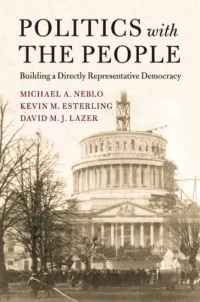
Politics with the People: Building a Directly Representative Democracy
Published by Cambridge University Press, 2018
Many citizens in the US and abroad fear that democratic institutions have become weak and continue to weaken. Politics with the People develops the principles and practice of 'directly representative democracy' - a new way of connecting citizens and elected officials to improve representative government. Sitting members of Congress agreed to meet with groups of their constituents via online, deliberative town hall meetings to discuss some of the most important and controversial issues of the day. The results from these experiments reveal a model of how our democracy could work, where politicians consult with and inform citizens in substantive discussions, and where otherwise marginalized citizens participate and are empowered. Moving beyond our broken system of interest group politics and partisan blood sport, directly representative reforms will help restore citizens' faith in the institutions of democratic self-government, precisely at a time when those institutions themselves feel dysfunctional and endangered.
Philipp Rehm
Risk Inequality and Welfare States: Social Policy Preferences, Development, and Dynamics
Published by Cambridge University Press, 2016
Abstract: The transformation of night-watchman states into welfare states is one of the most notable societal developments in recent history. In 1880, not a single country had a nationally compulsory social policy program. A few decades later, every single one of today's rich democracies had adopted programs covering all or almost all of the main risks people face: old age, sickness, accident, and unemployment. These programs rapidly expanded in terms of range, reach, and resources. Today, all rich democracies cover all main risks for a vast majority of citizens, with binding public or mandatory private programs. Three aspects of this remarkable transformation are particularly fascinating: the trend (the transformation to insurance states happened in all rich democracies); differences across countries (the generosity of social policy varies greatly across countries); and the dynamics of the process. This book offers a theory that not only explains this remarkable transition but also explains cross-national differences and the role of crises for social policy development.
Michael Neblo
Deliberative Democracy between Theory and Practice
Published by Cambridge University Press, 2015
Abstract: Deliberative democrats seek to link political choices more closely to the deliberations of common citizens, rather than consigning them to speak only in the desiccated language of checks on a ballot. Sober thinkers from Plato to today, however, have argued that if we want to make good decisions, we cannot entrust them to the deliberations of common citizens. Critics argue that deliberative democracy is wildly unworkable in practice. Deliberative Democracy between Theory and Practice cuts across this debate by clarifying the structure of a deliberative democratic system and goes on to re-evaluate the main empirical challenges to deliberative democracy in light of this new frame. It simultaneously reclaims the wider theory of deliberative democracy and meets the empirical critics squarely on terms that advance, rather than evade, the debate. Doing so has important implications for institutional design, the normative theory of democracy, and priorities for future research and practice.
Alexander Wendt

Quantum Mind and Social Science: Unifying Physical and Social Ontology
Published by Cambridge University Press, 2015
Abstract: There is an underlying assumption in the social sciences that consciousness and social life are ultimately classical physical/material phenomena. In this ground-breaking book, Alexander Wendt challenges this assumption by proposing that consciousness is, in fact, a macroscopic quantum mechanical phenomenon. In the first half of the book, Wendt justifies the insertion of quantum theory into social scientific debates, introduces social scientists to quantum theory and the philosophical controversy about its interpretation, and then defends the quantum consciousness hypothesis against the orthodox, classical approach to the mind-body problem. In the second half, he develops the implications of this metaphysical perspective for the nature of language and the agent-structure problem in social ontology. Wendt's argument is a revolutionary development which raises fundamental questions about the nature of social life and the work of those who study it. -Cambridge University Press Review
Sara Watson
The Left Divided: The Development and Transformation of Advanced Welfare States
Published by Oxford University Press, 2015
Abstract: Why do some countries construct strong systems of social protection, while others leave workers exposed to market forces? Among the most robust findings of the comparative political economy literature is the claim that the more political resources controlled by the left, the more likely a country is to have a generous, universal system of social protection. In contrast, The Left Divided argues that the strength and position taken by the far left is an important and overlooked determinant of social protection outcomes. The book presents a framework for distinguishing between different types of left movements and analyzes how the distribution of resources within the left shapes party strategies for expanding social protection in theoretically unanticipated ways. To demonstrate the counterintuitive effects of having the far-left control significant political resources, Watson combines in-depth case studies of Iberia with cross-national analysis of OECD countries and qualitative comparative analyses of other divided lefts.
Richard Gunther, Paul A. Beck, Pedro C. Magalhães, and Alejandro Moreno
Voting in Old and New Democracies
Published by Routledge, 2016
Abstract: Unlike most studies that focus their attention on established democracies or countries exclusively within one world region, this book presents a rigorous and innovative analysis of voting in elections in both old and new democracies in 18 countries on five continents between 1992 and 2007. Including new factors that have been neglected in previous studies of electoral politics, such as sociopolitical values and the influence of media, personal discussion, and organizational intermediaries, this book goes beyond voting to examine reactions to elections and their role in democratic politics.
Randall L. Schweller
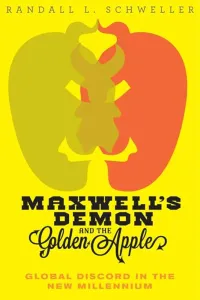
Maxwell's Demon and the Golden Apple: Global Discord in the New Millennium
Published by Johns Hopkins University Press, 2014
Abstract: Just what exactly will follow the American century? This is the question Randall L. Schweller explores in his provocative assessment of international politics in the twenty-first century. Schweller considers the future of world politics, correlating our reliance on technology and our multitasking, distracted, disorganized lives with a fragmenting world order. He combines the Greek myth of the Golden Apple of Discord, which explains the start of the Trojan War, with a look at the second law of thermodynamics, or entropy. "In the coming age,” Schweller writes, “disorder will reign supreme as the world succumbs to entropy, an irreversible process of disorganization that governs the direction of all physical changes taking place in the universe.” Interweaving his theory of global disorder with issues on the world stage—coupled with a disquisition on board games and the cell phone app Angry Birds—Schweller’s thesis yields astonishing insights. Maxwell’s Demon and the Golden Apple will appeal to leaders of multinational corporations and government programs as well as instructors of undergraduate courses in international relations. "Schweller is one of the brightest international relations scholars of his generation, and his insights are genuinely controversial. Maxwell’s Demon and the Golden Apple is a must-read text."—Daniel Drezner, Tufts University, author of Theories of International Politics and Zombies
Jennifer Mitzen

Power in Concert: The Nineteenth-Century Origins of Global Governance
Published by University of Chicago Press, 2013
Abstract: How states cooperate in the absence of a sovereign power is a perennial question in international relations. With Power in Concert, Jennifer Mitzen argues that global governance is more than just the cooperation of states under anarchy: it is the formation and maintenance of collective intentions, or joint commitments among states to address problems together. The key mechanism through which these intentions are sustained is face-to-face diplomacy, which keeps states’ obligations to one another salient and helps them solve problems on a day-to-day basis. Mitzen argues that the origins of this practice lie in the Concert of Europe, an informal agreement among five European states in the wake of the Napoleonic wars to reduce the possibility of recurrence. The Concert first institutionalized the practice of states jointly managing the balance of power, and Mitzen shows that the words and actions of state leaders in public forums contributed to collective self-restraint and a shared commitment to problem-solving – and at a time when communication was considerably more difficult than it is today. Despite the Concert’s eventual breakdown, the practice it introduced – of face-to-face diplomacy as a mode of joint problem-solving – survived and is the basis of global governance today.
Bear F. Braumoeller

The Great Powers and the International System
Published by Cambridge University Press, 2012
Abstract: Do great leaders make history? Or are they compelled to act by historical circumstance? This debate has remained unresolved since Thomas Carlyle and Karl Marx framed it in the mid-nineteenth century, yet implicit answers inform our policies and our views of history. In this book, Professor Bear F. Braumoeller argues persuasively that both perspectives are correct: leaders shape the main material and ideological forces of history that subsequently constrain and compel them. His studies of the Congress of Vienna, the interwar period, and the end of the Cold War illustrate this dynamic, and the data he marshals provide systematic evidence that leaders both shape and are constrained by the structure of the international system.
Eric MacGilvray
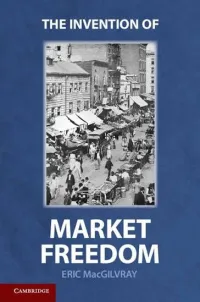
The Invention of Market Freedom
Published by Cambridge University Press, 2012
Abstract: How did the value of freedom become so closely associated with the institution of the market? Why did the idea of market freedom hold so little appeal before the modern period, and how can we explain its rise to dominance? In The Invention of Market Freedom, Eric MacGilvray addresses these questions by contrasting the market conception of freedom with the republican view that it displaced. After analyzing the ethical core and exploring the conceptual complexity of republican freedom, MacGilvray shows how this way of thinking was confronted with, altered in response to, and finally overcome by the rise of modern market societies. By learning to see market freedom as something that was invented, we can become more alert to the ways in which the appeal to freedom shapes and distorts our thinking about politics today.
Anthony Mughan and Robert Hislope
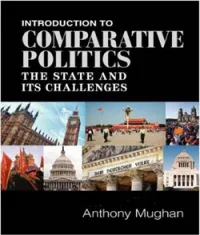
Introduction to Comparative Politics: The State and its Challenges
Published by Cambridge University Press, 2012
Abstract: This stimulating and accessible introduction to comparative politics offers a fresh perspective on the fundamentals of political science. Its central theme is the enduring political significance of the modern state despite severe challenges to its sovereignty. There are three main sections to the book. The first traces the origins and meaning of the state and proceeds to explore its relationship to the practice of politics. The second examines how states are governed and compares patterns of governance found in the two major regime types in the world today, democracy and authoritarianism. The last section discusses several contemporary challenges - globalization, ethnic nationalism, terrorism, and organized crime - to state sovereignty. Designed to appeal to students and professors alike, this lively text engages readers as it traces states' struggles against the mutually reinforcing pressures of global economic and political interdependence, fragmented identities and secessionism, transnational criminal networks, and terrorism.
Vladimir Kogan, Steven P. Erie, and Scott A. MacKenzie
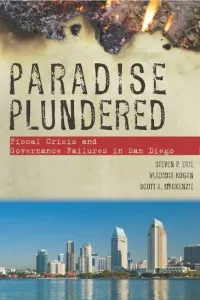
Paradise Plundered: Fiscal Crisis and Governance Crisis in San Diego
Published by Stanford University Press, 2011
Abstract: The early 21st century has not been kind to California's reputation for good government. But the Golden State's governance flaws reflect worrisome national trends with origins in the 1970s and 1980s. Growing voter distrust with government, a demand for services but not taxes to pay for them, a sharp decline in enlightened leadership and effective civic watchdogs, and dysfunctional political institutions have all contributed to the current governance malaise. Until recently, San Diego, California—America's 8th largest city—seemed immune to such systematic governance disorders. This sunny beach town entered the 1990s proclaiming to be "America's Finest City," but in a few short years its reputation went from "Futureville" to "Enron-by-the-Sea." In this eye-opening and telling narrative, Steven P. Erie, Vladimir Kogan, and Scott A. MacKenzie mix policy analysis, political theory, and history to explore and explain the unintended but largely predictable failures of governance in San Diego. Using untapped primary sources—interviews with key decision makers and public documents—and benchmarking San Diego with other leading California cities, Paradise Plundered examines critical dimensions of San Diego's governance failure: a multi-billion dollar pension deficit; a chronic budget deficit; inadequate city services and infrastructure; grandiose planning initiatives divorced from dire fiscal realities; an insulated downtown redevelopment program plagued by poorly-crafted public-private partnerships; and, for the metropolitan region, inadequate airport and port facilities, a severe underinvestment in firefighting capacity despite destructive wildfires, and heightened Mexican border security concerns. Far from a sunny story of paradise and prosperity, this account takes stock of an important but understudied city, its failed civic leadership, and poorly performing institutions, policy making, and planning. Though the extent of these failures may place San Diego in a league of its own, other cities are experiencing similar challenges and political changes. As such, this tale of civic woe offers valuable lessons for urban scholars, practitioners, and general readers concerned about the future of their own cities.
John Mueller and Mark G. Stewart

Terrorism, Security, and Money: Balancing the Risks, Benefits, and Costs of Homeland Security
Published by Oxford University Press, 2011
Abstract: In seeking to evaluate the efficacy of post-9/11 homeland security expenses--which have risen by more than a trillion dollars, not including war costs--the common query has been, "Are we safer?" This, however, is the wrong question. Of course, we are "safer"--the posting of a single security guard at one building's entrance enhances safety. The correct question is, "Are any gains in security worth the funds expended?"
In this engaging, readable book, John Mueller and Mark Stewart apply risk and cost-benefit evaluation techniques to answer this very question. This analytical approach has been used throughout the world for decades by regulators, academics, and businesses--but, as a recent National Academy of Science study suggests, it has never been capably applied by the people administering homeland security funds. Given the limited risk terrorism presents, expenses meant to lower it have for the most part simply not been worth it. For example, to be considered cost-effective, increased American homeland security expenditures would have had each year to have foiled up to 1,667 attacks roughly like the one intended on Times Square in 2010--more than four a day. Cataloging the mistakes that the US has made--and continues to make--in managing homeland security programs, Terror, Security, and Money has the potential to redirect our efforts toward a more productive and far more cost-effective course.
Sarah Brooks

Social Protection and the Market in Latin America: The Transformation of Social Security Institutions
Published by Cambridge University Press, 2009
Abstract: Social security institutions have been among the most stable post-war social programs around the world. Increasingly, however, these institutions have undergone profound transformation from public risk-pooling systems to individual market-based designs. Why has this 'privatization' occurred? Why, moreover, do some governments enact more radical pension privatizations than others? This book provides a theoretical and empirical account of when and to what degree governments privatize national old-age pension systems. Quantitative cross-national analysis simulates the degree of pension privatization around the world and tests competing hypotheses to explain reform outcomes. In addition, comparative analysis of pension reforms in Argentina, Brazil, Mexico and Uruguay evaluate a causal theory of institutional change. The central argument is that pension privatization emerges from political conflict, rather than from exogenous pressures. The argument is developed around three dimensions: the double bind of globalization, contingent path-dependent processes, and the legislative politics of loss imposition.