Alumna Profile - Dr. Pierce
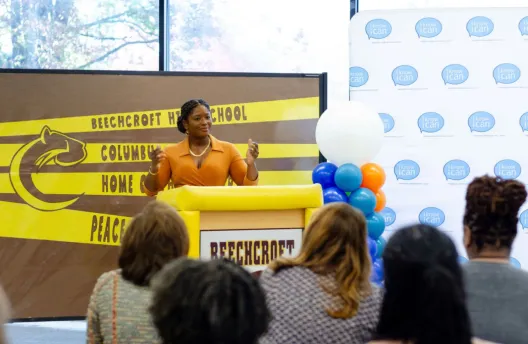
An Interview with Dr. Tina Pierce
What did you study in your PhD at Ohio State?
I earned my PhD in Political Science with a focus on American politics, political behavior, public policy institutions, and a minor in Sociology. My scholarship examined how power operates within public institutions and how policy decisions impact communities, especially those historically excluded from decision-making.
What is your current position and where do you work?
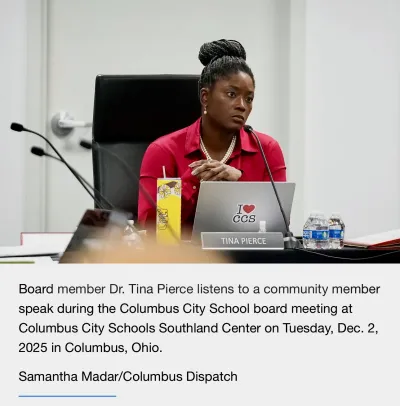
I currently serve as a member of the Columbus Board of Education, the governing body for Columbus City Schools, the largest public school district in Ohio.
What does your work involve?
My work centers on governance, accountability, and system leadership. This includes setting district priorities, monitoring outcomes, ensuring fiscal and ethical stewardship, and advocating for policies that advance equity, student success, and community trust. At its core, the work is about ensuring our public education system serves our students, families, staff, and the broader community well.
What do you enjoy most about your work?
The opportunity to help shape systems that impact thousands of lives. Public education is one of the most powerful tools that benefits both the individual and society, from personal development and social mobility to civic engagement and community building. I am honored to play a role in helping to influence conditions where students, families, and educators can thrive.
How did you get into this line of work?
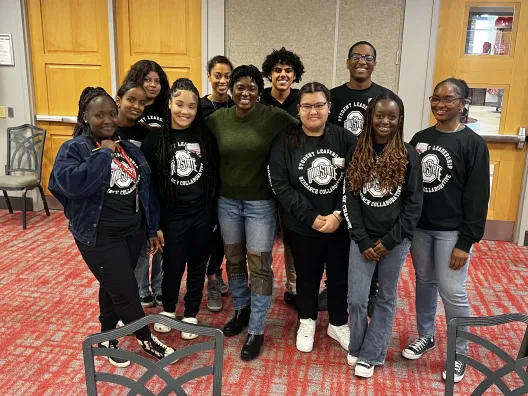
I have always been drawn to public service and civic leadership. My path was shaped by student leadership programs and opportunities from elementary school through college. At Ohio State, I served as a senator and ran for president of the Undergraduate Student Government (USG). I also represented my college on the Council of Graduate Students (CGS). In these roles, I saw firsthand how decisions and policies affect people’s lives every day. Serving on the Columbus Board of Education has been a natural extension of that commitment.
What transferable skills from your graduate studies are you using in your current career?
Every day, I use skills developed during my graduate studies: critical analysis and strategic thinking; research literacy; data-informed decision-making; clear, persuasive communication; policy analysis and interpretation; and facilitating complex conversations across differences. Graduate school taught me how to ask constructive questions, assess evidence, navigate complex systems, and remain grounded in both rigor and purpose; skills that are invaluable in leadership.
How has your background in political science influenced your work?
Political science trained me to see institutions as systems shaped by people, values, and incentives. It gave me a deep understanding that power flows through institutions and that it can be designed, challenged, and reimagined. That lens informs how I approach governance, accountability, and equity. I’m always asking: Who benefits? Who is excluded? How do we build systems that are more just and effective? I understand that policy decisions have real human consequences.
Any advice for those looking to enter your field?
Stay curious, stay grounded in community, and don’t underestimate the value of your lived experience and relationship-building. Public leadership requires technical skills, humility, resilience, and a willingness to listen and learn. Learn the systems, never lose sight of the people those systems are meant to serve, and remember that meaningful change is often incremental.
Anything else you’d like to share?
Education and civic leadership are lifelong journeys. Learning doesn’t stop when you graduate from high school or college. It continues throughout life. In my case, education and civic leadership continue through scholarship, service, reflection, collective action, and governance. When we invest in leadership at every level, we strengthen our institutions and democracy itself. I believe our responsibility is to leave institutions stronger, more inclusive, and more responsive than we found them. That belief continues to guide my work.